The marijuana industry has successfully conned nine states into legalizing recreational marijuana since 2012 and expects to win over several more this election season. The public foolishly perceives marijuana as non-addictive, relatively harmless and a “safer” drug. Perhaps because in states where marijuana is legal, dispensaries sell it like candy and blatantly market it to children. However, evidence suggests that marijuana is addictive, and it has serious effects on physical and mental health.
Marijuana IS addictive. In fact, 138,000 people sought treatment for their marijuana use in 2015. Marijuana use may also cause bipolar disorder and a newly-discovered vomiting syndrome called cannabinoid hyperemesis syndrome. Not only can using marijuana adversely affect your health but if you drive while high, you could get a D.U.I. Big marijuana doesn’t mention these risks, they only want your money.
Throughout this blog, I will present scientific evidence that proves marijuana negatively affects your health and the more accessible it is, the more people will use it. I will also feature stories by people who have witnessed the effects of marijuana firsthand. Together, we’ll see through the marijuana industry’s clever marketing tactics. You can consider this blog the source of everything you need to know about why you should vote against legalizing marijuana in your state.
Get Your Facts Straight
Big Marijuana will have you believe that marijuana’s so safe you can use it every day to increase appetite or help you sleep, eat it as your favorite candy and even share it with your dog to keep him from barking. Pot shops have marketed their products as a fun, harmless way to relax for too long.
Myth:
Marijuana soothes users’ mental distress and can even treat depression and anxiety.
Fact:
There is no evidence to support the claim “marijuana may be used to treat anxiety and depression”, marijuana use can cause bipolar disorder. Researchers at Warwick Medical School found evidence that directly associates frequent marijuana use in teen years with experiencing hypomania later in life. Hypomania is the manic phase of bipolar affective disorder and is indicated as a “period of elated mood, over-active and excited behavior [and] reduced need for sleep.”
Myth:
Marijuana is a cure for nausea.
Fact:
While marijuana may treat some people’s nausea, it may also make it much worse. A new condition new condition called cannabinoid hyperemesis syndrome is on the rise in the U.S. Severe nausea and vomiting as a result of cannabis ingestion characterize the condition. One patient suffered from such a severe case, it kept her from holding down a job until she quit using marijuana completely.
Myth:
You can’t get addicted to marijuana.
Fact:
Marijuana use disorder is a widely-recognized condition and it is possible to develop. According to the Substance Abuse and Mental Health Services Administration, about 4 million people aged 12 or older suffered from a marijuana use disorder in 2016. It is characterized by severe impairment caused by frequent marijuana use, marijuana-related health problems, heavy use, and failure to fulfill major obligations at work, school, or home.
Myth:
You can’t overdose on marijuana.
Fact:
The first reported cannabis-associated death occurred in 2015 when an 11-month-old male had a seizure which caused his breathing and heart to stop. The official cause of death was myocarditis which doctors ruled could only be caused the cannabis found in his system, according to the case report of the autopsy. It is unknown how the boy ingested marijuana, but it’s possible he ate a THC-laced edible. The rate of marijuana-related visits to Children’s Hospital Colorado doubled after recreational marijuana legalization. According to a study done by the University of Colorado, calls to the Poison Control Center regarding marijuana went from nine in 2009 to 47 in 2015.
Why it’s NOT safe to smoke marijuana while pregnant
Even pregnant Americans are jumping on the legal marijuana bandwagon. Marijuana use among pregnant women increased 62 percent from 2002 to 2014, becoming the most commonly used drug among this demographic. By voting no to legal marijuana in your state, you can prevent further harm to pregnant women and their children at the hands of Big Marijuana.
Many pregnant marijuana users say it helps with nausea and morning sickness, paying no mind to the irreversible harm they are causing their unborn baby. The mothers in this article smoke so much marijuana, their kids tested positive for tetrahydrocannabinol (THC, the effect-inducing ingredient in marijuana).
It’s too early to tell exactly what biological catastrophes will result from heavy marijuana use among pregnant women, but existing evidence proves it’s definitely not safe. According to a study published in the American Journal of Obstetrics and Gynecology, marijuana use during pregnancy increases the risk of stillbirth by 10 percent. If the fetus survives the exposure to THC, it is 5 percent more likely to be born underweight, which will increase its risk for health problems.
According to the American College of Obstetricians and Gynecologists, children exposed to marijuana in utero are more likely to have poor visual-motor coordination which will hinder their problem solving and athletic abilities.
Children exposed to marijuana in utero are also more likely to use the drug themselves. These children may also have disposition for behavioral problems and addictive personality traits. This allows for the cycle of substance use and addiction to continue another generation.
If the health ramifications aren’t enough to keep expecting moms from smoking pot, maybe the legal consequences are. ALL states, even ones where recreational marijuana is legal, consider smoking pot while pregnant child abuse/endangerement and if a mother tests positive while pregnant she stands the risk of serving jail time or having her child taken away.
Instead of waiting to see the disastrous long-term of this dangerous new trend, stop Big Marijuana in its tracks and vote no to recreational marijuana legalization.
How Marijuana Affected My Life
To provide some context, I’m pro-choice and pro-gun control. I have a feminist tattoo and my minor is Women’s Studies. Due to my otherwise left-leaning opinions, my friends are often shocked to learn that I’m against legalizing recreational marijuana. They’ll often scoff or laugh at me after I decline their invitation to smoke. They usually think I’m kidding. When it sinks in that I’m being serious, they become uncomfortable. Then, I become uncomfortable and attempt to ease the situation by saying something like “just because I get drug tested at my job.” This is true, but my reasons to avoid marijuana go far beyond that.
I have struggled to make friends my whole life. Up until my freshman year of high school, I spent a lot of my free time alone playing Mario Brothers with my mom. I was a really weird kid, okay?
When I transitioned from junior high to high school I was awkward but desperate to make friends. Eventually I ended up in the all-accepting party scene, which involved a lot of weed. When I smoked, people told me I became a funnier, friendlier version of myself. It gave me a sense of pride and helped me feel like I was finally fitting in.
I was smoking weed weekly. I told myself I was in control because I wasn’t buying it from a drug dealer and smoking it by myself. I was just smoking it with my friends when it was “around.” It was always around. Soon, I was smoking it every day. I was high so often that being sober began to feel uncomfortable. I began spending at least $40 on weed per week and smoking it multiple times a day. I wasn’t just buying weed and smoking it by myself (my two biggest rules), I was smoking it after I woke up, at lunch, after school and before bed. My need to smoke weed increased and I saw no problem with it, I figured I could just live like that forever and be a cool stoner chick.
I went along like that for a few months before facing any real consequences. I was failing in school but that didn’t bother me. Eventually, I was caught with weed at school, couldn’t be without it. The police were called and I was charged with Minor In Possession. My mom picked me up and cried for the next three days. I was suspended from school. Any shred of a reputation I had was ruined.
I didn’t even care. I just wanted to know when my mom was going to leave the house so I could meet my dealer. I continued to smoke for a while. I was always by myself because none of my friends were allowed to hang out with me anymore. Soon, I would smoke and just feel really low. Smoking weed didn’t offer the joy and laughter it once did. It just made me feel sad and nervous. I began having suicidal thoughts after smoking. I finally stopped about halfway through high school. By then, I was labeled a party girl and couldn’t seem to shake the reputation. Even when I tried to socialize sober, the words weren’t there. It’s like I missed out on learning how to socialize naturally because I had been high for so long. So, instead of socializing, I focused on school and brought my grades up. Slowly, I managed to make new friends. I struggled with depression and anxiety, which the marijuana is largely to blame for.
I still struggle today but I’m feeling a lot better. With all of the information coming out about marijuana use, my mental health problems are beginning to make sense. I just wish people understood that marijuana isn’t a harmless substance. There’s nothing cool or funny about being a stoner and marijuana can alter your brain and your life.
OpEd: Why you shouldn’t legalize recreational marijuana, from someone who’s done it before
Submitted to The Detroit News
By Jessie Schirrick
I live in Reno, Nevada and in the 2016 election, I voted to legalize recreational marijuana in my state. I now deeply regret my decision for reasons involving the marijuana industry itself and the careless consumers who support it. As someone who once used marijuana regularly and suffered mental health consequences because of it, I want to prevent as many people as possible from suffering too.
I was using marijuana frequently at one time and I didn’t think it was possible to be addicted to marijuana. Looking back on my cravings for it, my need to take it everywhere I went and the important things in my life that I gave up for it, I would definitely say I was addicted. I have stopped smoking, but I still suffer from anxiety and depression that probably wouldn’t be there if not for marijuana.
Even though there are few laws requiring people to use marijuana “responsibly,” many people still do things while high they aren’t supposed to, like driving. There is a common misconception that marijuana doesn’t impair your driving ability. According to the National Institute of Drug Abuse, marijuana can slow reaction time, impair time and distance judgment and decrease coordination. Some statistics suggest it may be even more dangerous than alcohol. The National Institute of Drug Abuse says drivers with THC in their blood are twice as likely to be responsible for a deadly crash or be killed than drivers who haven’t used drugs or alcohol. Using marijuana is riskier than drinking alcohol because it’s harder for people to measure exactly how much they can ingest before they become significantly impaired. Legalizing marijuana makes people think it safe and acceptable and therefore they are more likely to engage in risky behaviors while using it.
The legalization of marijuana would be a significant danger to Michigan children as many THC-laced edibles take the form of candy and appear to be marketed to children. Although there are laws requiring opaque marijuana packaging, many packages employ bright color schemes and interesting designs reminiscent of the tobacco industry’s Joe Camel. What people fail to see is that Big Marijuana is just like any other industry pushing an addictive product- they want to attract young consumers so that they can make them into lifetime customers.
Please heed my warning and vote no to legalizing marijuana in the Michigan general election on Nov. 6.
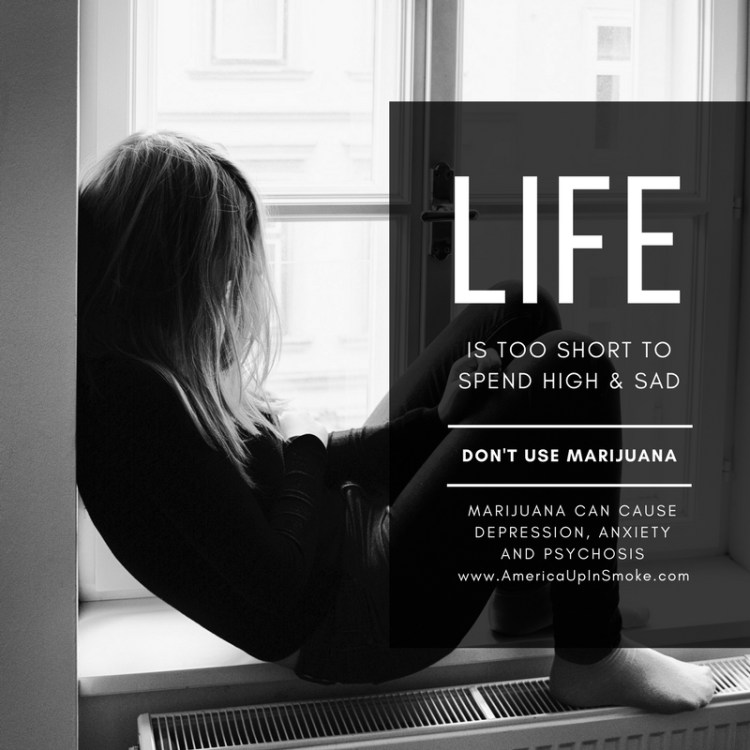
Photo Cred: Anenome123 from CC0
Weed is NOT the harmless plant Big Marijuana wants you to believe it is. Protect the future of your kids and your state by voting no on Nov. 6.
PARENTS: Here’s how you should talk to your kids about marijuana
As I mentioned in my previous blog post, I was addicted to marijuana in my teens. I really wish someone had talked to me about the risks of using marijuana at such a young age. I can’t say for sure that I would have listened and unfortunately, most of the adults around me didn’t know exactly how marijuana affected people long-term. If you think age restrictions will keep your teen from using marijuana, think again. If marijuana is legalized it will only make it more accessible. The National Institute on Drug Abuse (NIDA) reports that teens’ relationship with their parents DOES impact their behaviors. NIDA also reports the best way to prevent your teen from using marijuana is by talking to them and staying engaged in their lives. I’ve compiled four tips from NIDA, AmericanAddictionCenters.org and Partnership for Drug-Free Kids for having a meaningful conversation with your teen about using marijuana.
- Don’t accuse, especially if you don’t know that your teen has done anything illegal. Give your teen the benefit of the doubt and they will be more willing to listen and open up to you.
- State the facts. Tell your teen about the serious mental and physical health risks. Don’t exaggerate or try to scare them. Just make it clear that using marijuana at such a young age can severely impact their intellectual and social development.
- Help them understand that marijuana isn’t necessarily safer than alcohol or other drugs just because it comes from a plant. Tell them that marijuana comes in varying strengths and it can be hard to know exactly what effect it will have. This will help them understand that even just experimenting isn’t safe.
- If you want your teen to respect you and your advice, you have to respect them and their thoughts. It’s important that this is a conversation and not a lecture. Your teen will ultimately be the one to decide whether or not they will use marijuana
How Marijuana Affects the Teen Brain
The teen years are “the absolute worst time” to use marijuana. This is the consensus of many studies and neurologists. Krista Lisdahl, director of the brain imaging and neuropsychology lab at University of Wisconsin, Milwaukee explained this sentiment in a National Public Radio article in 2014.
“Actually, in childhood our brain is larger…Then, during the teenage years, our brain is getting rid of those connections that weren’t really used, and it prunes back,” said Lisdahl
Lisdahl goes onto explain that marijuana disrupts this process and hinders the user from achieving their fullest intellectual capacity.
The National Institute of Drug Abuse (NIDA) affirms Lisdahl’s suggestion for teens to refrain from using marijuana, citing several studies that show marijuana use can cause functional impairment in cognitive abilities. NIDA also cites studies that show adolescent exposure to THC is associated with an altered reward system, increasing the likelihood that marijuana users will try other drugs. Evidence shows these functions may be repaired after abstaining from marijuana use. Users who engage in frequent, uninterrupted use will not recover these functions.
If these findings aren’t enough to keep teens off the pot, maybe this study from the University of Connecticut will. The Collaborative Study on the Genetics of Alcoholism collected information on 1,165 young people beginning at age 12. The participants were assessed every two years intervals until they were between 25 and 34 years old. Researchers assessed their educational levels, marital status, full-time employment and social and economic potential. The evidence found that “chronic marijuana use in adolescence was negatively associated with achieving important developmental milestones in young adulthood.” Milestones such as going to college, getting a job or getting married.
For those of you who are reading this and thinking “age restrictions on buying weed will stop teens from smoking it,” I cite a study done by the Oregon Research Institute which showed that marijuana legalization increased dependence among teen users. This study also indicated that age restrictions may not effectively keep teens from using marijuana. Legalizing recreational marijuana WILL increase teens’ access.
Vote no to legalizing marijuana in your state young minds and yourself from its’ harms.
 Jessie Schirrick